Adult social care and its funding Read more

Which arguments do you most agree with? - stage 2/6

Phrases with an * next to them are explained in the background. Click on the book symbol, which is at the top of the screen in the pages that follow.

Rate each argument according to how much you disagree or agree with it.

Sources for any references in 'read more' are at the end of the background notes.

Preventing care needs from developing is important, but it needs investment and is not a cure for under-funding.

read more

As a senior social care manager put it, "How can we abandon people with high needs to invest in prevention? That is our biggest dilemma."

disagree
agree

The current system is inadequate. It is hard to understand and the number of people getting help has been falling.

read more

Examples of the difficulties people have in navigating the system:

It’s a long process. I’ve gone through it with my dad. It can be months before anything happens and you need it. Then, it’s means-tested. It gets passed to departments and then social services and you wonder if it’s worth it. (Kings Lynn workshop)

Like I say, even just getting a button [personal alarm], there’s so much red tape to go through just to get it. It’s not easy to get support. (Leeds workshop)

As a result of funding cuts*, the proportion of older people who received social care support organised by English local authorities fell from 10% in 2005/06 to 6% in 2013/14. One result has been a rapid growth in the number of people who pay for their own care (so-called self-funders).

disagree
agree

We should provide free personal care, which is more effective and easier to understand than the present system.

read more

I think it’s an improvement. It’s simple, and it’s for everybody, and it’s a basic level. (Leeds workshop)

It’s fairer. In Scotland, the number of people getting personal care grew significantly once the policy was introduced. This suggests that the system is providing care for people whose needs were previously unmet.

Helping people with low needs now may prevent them developing high needs later. It may help people stay longer in their own home, delaying the need for residential care.


Finally, this approach means that eligibility for social care is the same as for health care. This makes it easier for the two systems to work together.

disagree
agree

The state should take on more responsibility. We cannot rely on family, friends, and volunteers all the time.

read more

Another reason for looking to the state is that more people have no children.

Where family members are involved, how far should that go? Shopping might be fair enough, but what about managing incontinence?

Here’s an example on the difficulty of relying on friends:

My good friend, she died three months ago. She had a cancer. She was very helping. Another friend and her, on Sunday they used to have lunch with me. I used to cook for them. Ah, my friend died and then, after that it’s gone. She used to help me with things, we would do our shopping together. I feel more isolated now.

(Woman in her nineties, living alone in supported living accommodation)

.And here’s an example of how helpful local authorities can be:

I’ve got to shower in my bath, and about a year ago I thought, wait a minute, anyway, I got on to social services and they supply things to help don’t they? A guy came round and put me a seat in the bath, brilliant. Sit down, do my hair and it’s all done.

(Man in his eighties living alone)

disagree
agree

We should stick with the current system so that limited resources go to those with the lowest means and highest needs.

read more

Another advantage of the current system is that it has been in place for years. Each reorganisation takes a lot of time and energy which would be better used caring for people.

disagree
agree

The current system can work if it focuses on helping people stay in their own home, with good quality of life.

read more

This approach involves prevention: acting early to prevent significant and expensive care needs from developing. This approach can save money overall.

Here are two examples of unmet need leading to higher care needs. The focus should be on preventing those higher needs from developing in the first place.

  • A lack of equipment/adaptations leading to a bad fall/injury inside the home
  • People becoming lonely and isolated at home through lack of help to go out. Lacking social connections is as damaging to our health as smoking 15 cigarettes a day.
disagree
agree

We should cap the costs anyone has to pay for social care so more people have assets left to pass on to their families.

read more

‘Catastrophic’ care costs are defined as costs over £100,000, so this is one figure that the cap could be set at.

A person with dementia can live for ten years or more: their care can cost more than £200,000. Currently, about 40,000 people a year have to sell their house to pay for care.

It has been argued that wealthier people can afford high costs. Against this, they pay more in tax, so it is fair that they be eligible for state funded social care, as they are with the NHS.

disagree
agree

People will accept paying more in tax if we earmark it, because then they can be sure it will be spent on social care

read more

Assembly members felt that if we simply increase income tax, “people will just see it as a tax increase” and “not understand why”. Whereas, with earmarking, the public would “know where the money is going” and, therefore, that it would be more “appealing”, “sellable” and “palatable” to voters.

The only reason we’re looking at ring-fencing is because the government’s got a bad track record. So, we don’t trust them to put so much into social care. It needs to be outlined from the start. (King’s Lynn workshop)

Reducing flexibility of how government spend the money is an advantage. (Leeds workshop)

disagree
agree

Families, neighbours and charities are more sensitive to people’s needs than the state, which should be the last resor

read more

Here’s an example of how inflexible local authority social care can be:

I had the balance problem and I wasn't supposed to have a shower on my own so they [the local authority] got a social worker to come. This person couldn't do anything to help me if I had fallen. So this ended up with me paying £17.50 an hour for somebody to come and watch telly while I had a shower and the only thing that she was required to do was call 999 if I had a fall. To me that seemed a completely unacceptable way of spending money.

(Dorothy, who lives alone and has arthritis, MS and a fracture taking time to heal.)

Perhaps we should be relying more on families as a matter of principle:

"We need to start thinking as a society about how we deal with care of our own parents. Nobody ever questions the fact that we look after our children, that’s just obvious. How we look after our parents is a similar responsibility."

David Mowat, ex-health minister, 2017

disagree
agree

We should not cap the costs anyone has to pay for their social care: some people can afford high costs.

read more

A very different argument is that a cap is OK, but a cap that is the same for everyone is unfair, given the differences in social care costs across the country. For example, care can be more expensive in London than in other regions. People living in areas where social care is more expensive would be likely to reach the cap sooner than people elsewhere.

disagree
agree

We shouldn’t provide free personal care. It costs more and doesn't concentrate scarce resources on those in most need

read more

Given that it costs more, can we afford it? Are people willing to pay more taxes? Is it right that the state pays for those who could afford to pay for themselves?

A means test. It’s inevitable. There’s no way that there’s enough money in the pot. (London workshop)

disagree
agree

Earmarking a particular tax for social care is too inflexible. What if the tax doesn’t raise enough money?

read more

Assembly Members’ concerns were that earmarked taxation was “too prescriptive”, “less flexible” and that it “doesn’t accommodate changing needs over time”.

These two quotes, from the workshops, develop the argument about inflexibiity. Of course, I disagree with it. It’s crazy. Say, you’ve got your income, in your home. You ring fence this amount for this, and you’ve got ‘X’ amount left for your car. Then your car breaks down and you can’t get it repaired, because you’ve got this money ring-fenced. (Leeds workshop)

If there are fewer younger workers, there won’t be enough to cover the costs, or do they raise the tax even more? (London workshop)

The Assembly members also had concerns about how some forms of earmarked taxation had not necessarily been ring-fenced and reserved for their nominated purpose in the past. National Insurance was given as an example.

disagree
agree

What is adult social care?

Adult social care provides help, care and protection from harm for adults with learning disabilities, physical disabilities and people with mental health problems.

Many people who receive social care are older people who are frail and/or living with long term health conditions, such as dementia or arthritis.

What is the aim of adult social care?

To help people be as independent as possible, retain their dignity and achieve a better quality of life.

Where does adult social care happen?

In people’s own homes.

In a residential care or nursing home.

What does it involve?

Personal help with things like washing, eating and getting dressed

Domestic help with things like shopping and cooking

It might also include less traditional services, such as giving people money to employ a personal assistant

The current funding system

Adult social care is not part of the NHS. Whereas the NHS is mostly free at the point of use, social care is not.

Local councils are responsible for social care for people who meet two criteria:

1. They must have high care needs

2. They must declare their income and assets. This is the asset test:
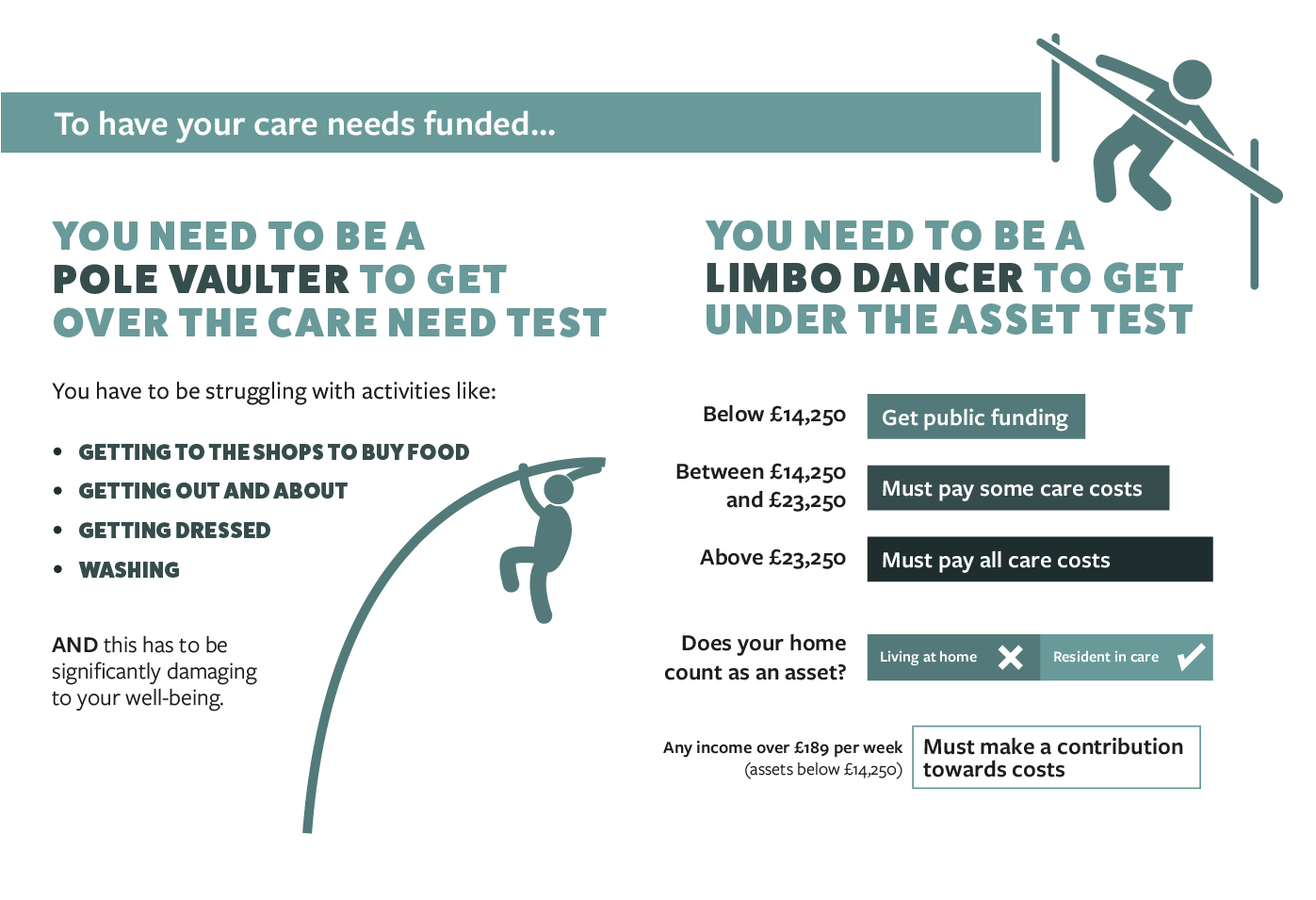
Local councils’ funding is mainly from: council tax, business rates, charges to service users, the NHS and government grants.

Demand is growing
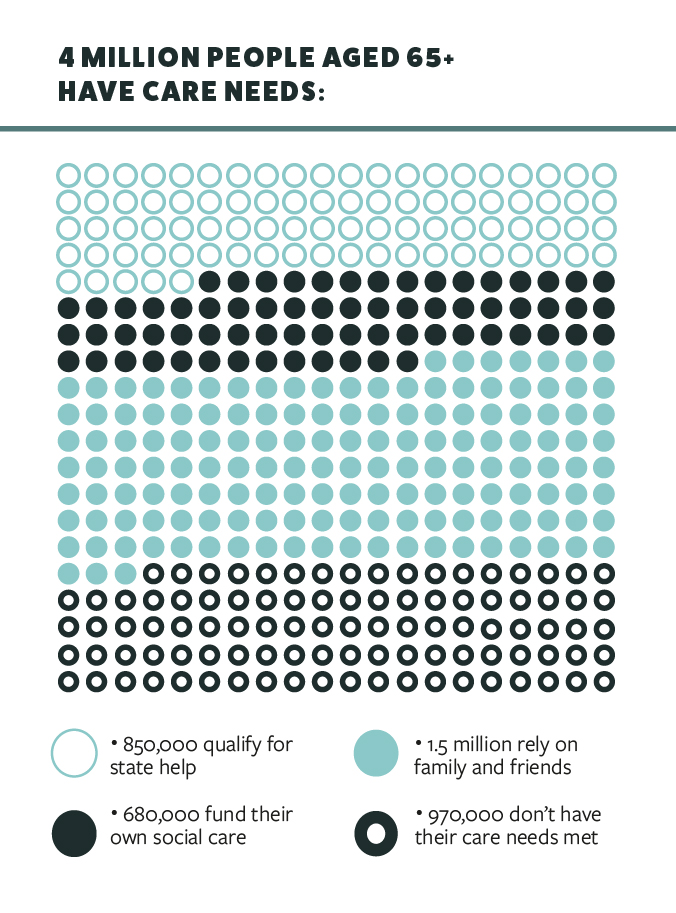
One study found that older people with unmet needs were not generally going hungry or cold or unsafe. But:

  • Carrying out the basic activities of daily living could take a lot of time and lead to pain and exhaustion
  • They were often unable to participate in hobbies and interests and unable to get out of the house, leading to loneliness and isolation

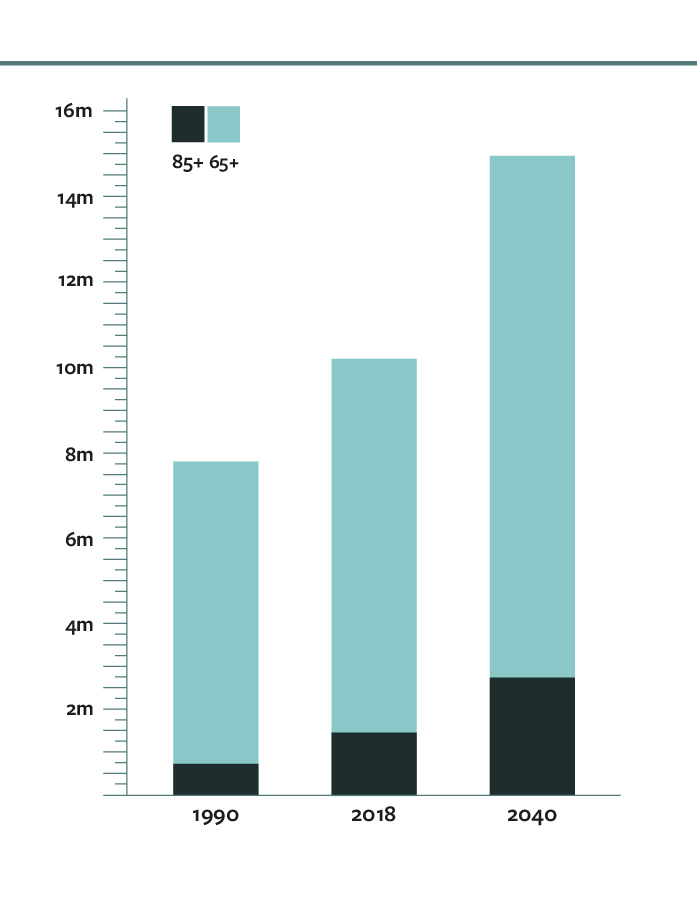
The number of people in the age ranges likely to need social care is growing:
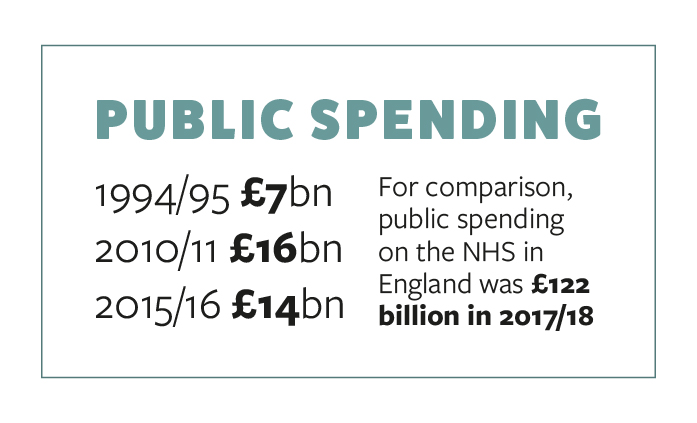
Public spending has been falling

Finding out more

The report of the Citizens Assembly on Social Care is at

https://publications.parliament.uk/pa/cm201719/cms...

The report on the workshops run by Ipsos MORI can be downloaded from this page:

https://www.ipsos.com/ipsos-mori/en-uk/understandi...
